Introduction
A Transformer is a device that changes the electricity voltage in an AC (alternating current) circuit. It can increase or decrease the voltage to match the needs of different electrical systems. Transformers were first invented in 1831 by a man named Michael Faraday, a chemist and physicist who is also known as the Father of Electricity. Faraday showed that wrapping two wire coils around a soft iron ring was able to transfer electricity. When he ran an alternating current through one coil, it created a magnetic field that generated electricity in the other coil. This was the first example of using magnetism to change voltage and current. (TMC Transformers, n.d.). Furthermore, as technology has gotten better, scientists as well as engineers have changed the overall design by testing different materials as well as ways to arrange the coils to make the transformer operate more efficiently. These changes have begun to lead to the transformers we currently use today. Due to this, we can move electricity safely and efficiently. (TMC Transformers, n.d.). Without these said transformers, it would be extremely hard to get electricity to houses, businesses, and factories. Proving how important an invention like this is in everyday lives.
Con Edison, a company that we New Yorkers are all familiar with, is responsible for our local power distribution towards all of New York City. Consolidated Edison, also known as Con Ed, was created in 1884 when six gas companies in New York City Merged. (American Oil & Gas Historical Society, n.d.) In the Early years, competition between gas companies had been intense, with companies fighting over customers. Leading to the creation of Con Edison. As time passed, Con Edison grew into one of the biggest gas industries in the country, powering all of New York City. (American Oil & Gas Historical Society, n.d.). We can assume that with all the power they supply to us (New Yorkers) they have an abundance of transformers to power our buildings, businesses, and homes. In Figure# 1, we see a Con Edison picture for a video that shows a Transformer and how it looks in recent years.
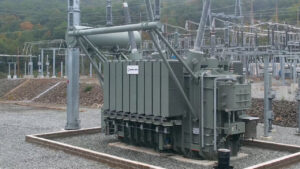
Figure 1 An overall body of a transformer in recent years built by Con Edison. Consolidated Edison Company of New York, Inc. (2021). Core system upgrades. In the Sustainability report 2021. Retrieved from https://lite.conedison.com/ehs/2021-sustainability-report/operational-excellence/core-system-upgrades/
The Core Components
Transformers have been such an essential invention for our lives. In this case, the Transformer tank provides protective as well as housing for all the components of the transformers. Which contain components like the core and windings. To ensure their efficiency and stability. (Star Delta, 2023)
Core
The Core could be described as the heart of the transformer, being able to generate the magnetic field from it. In addition to this, the primary job of the core is to guide the magnetic field from the “primary” winding to the “secondary” winding. (Star Delta, 2023) Why is it important you may ask? Well, why is it important to have a heart? It is important because without the core, the flow of the magnetic field wouldn’t flow so efficiently between the 2 windings. In doing so, the transformer wouldn’t be able to transfer energy properly. Meaning no power for your house, and business. As we can see in Figure #2, the transformer core provides many functions. Providing the ability to generate an electrical magnetic field, as well as transferring the energy to the windings.
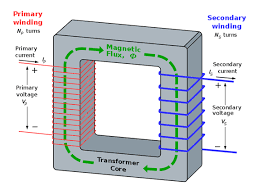
Figure 2 A Transformer Core Efficiency. (n.d.). Everything you need to know about transformer cores (the basics!) Corefficient. Retrieved March 17, 2025, from https://corefficientsrl.com/everything-you-need-to-know-about-transformer-cores-the-basics/
Primary Winding
The Primary winding is the coil that receives the electrical power. As the AC flows through it, creating the said magnetic field when it passes through the “core”. Inducing voltage in the secondary winding. The number of turns in the primary winding affects how much voltage is transferred. (Star Delta, 2023) In Figure# 3, we are also able to see in this distinct image of what a primary winding exactly is.
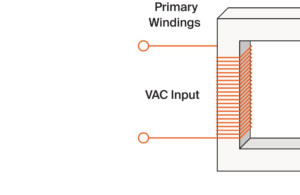
Figure 3 Primary Winding image Gulick, B. (2024, December 23). Guide to transformer windings & coils. Maddox. Retrieved March 17, 2025, from https://www.maddox.com/resources/articles/transformer-windings
Secondary Winding
The Secondary winding is where the electrical power is transferred to the “load”. As the secondary winding has a coil of wire, and the number of turns determines whether the voltage is increased or decreased. More turns in the secondary winding increase the voltage, while fewer turns decrease it. (Star Delta, 2023). In Figure# 4, we are also able to see in this distinct image of what a secondary winding exactly is.
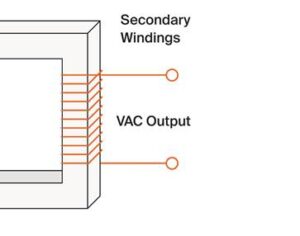
Figure 4 Secondary Winding Gulick, B. (2024, December 23). Guide to transformer windings & coils. Maddox. Retrieved March 17, 2025, from https://www.maddox.com/resources/articles/transformer-windings
Tap Changer
The Tap Changer is a device that allows the voltage level to be adjusted. This part is extremely important for regulating the output voltage based on the needs of the system. Being able to change the number of turns in the windings to provide different voltage levels. (Star Delta, 2023). We could assume without the Tap Changer; we would be overloading the electrical systems with such an abundance of electrical energy. Which is in this case is extremely bad. In Figure# 5, we can see how a tap changer looks. We are also able to see how it can function.
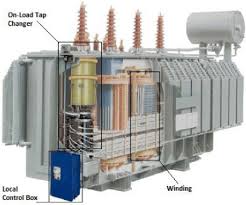
Figure 5 A picture of a tap changer Riaz, F., Wetzer, J. M., & Mor, A. R. (2017). Innovative approach toward an algorithm for automated defect recognition for on-load-tap changers. ResearchGate. Retrieved March 17, 2025, from https://www.researchgate.net/publica
Function
A Transformer operates by the electromagnetic principle. When electricity flows through the primary winding it creates a changing magnetic field. This field causes voltage to be generated in the secondary winding, transferring the electricity from one circuit to another. Being able to increase and decrease the voltage. Sending high amounts of electricity long distances without wasting that much energy. As well as recall Figure# 2, we can see the core. The Core itself has 2 principles, Primary winding and the secondary winding. We can see in this diagram that electricity flows from the primary winding, causing voltage to be generated in the secondary winding, as we said before. Transformers are designed incredibly to provide such efficient ways to provide power to our families.
Figure 2 A Transformer Core Efficiency. (n.d.). Everything you need to know about transformer cores (the basics!) Corefficient. Retrieved March 17, 2025, from https://corefficientsrl.com/everything-you-need-to-know-about-transformer-cores-the-basics/
Conclusion
Transformers are important devices that change voltage levels in electrical circuits. They have several parts, like the core, primary winding, secondary winding, and tap changer. The core directs the magnetic field, while the primary and secondary windings move the electrical energy. The tap changer helps adjust the voltage, making sure the transformer works at the right level for different needs. By working together, these parts help deliver electricity efficiently over long distances to our homes, businesses, etc.
References
TMC Transformers. (n.d.). The first transformer prototype. Retrieved March 16, 2025, from https://www.tmctransformers.com/wiki/the-first-transformer-prototype/
American Oil & Gas Historical Society. (n.d.). Con Edison – An American utility company. Retrieved March 16, 2025, from https://aoghs.org/old-oil-stocks/con-edison-american-utility-company/
Star Delta. (2023, September 21). What are the different parts of a transformer and their function? Star Delta. Retrieved March 17, 2025, from https://stardelta.com.au/parts-of-a-transformers-and-their-function/

